
Project - Antecedentes
You are here: Inicio Project Antecedents
Antecedents
INNOVATION ASPECT 1: The production of algae for carbon sequestration
On the one hand we have the growing challenge of climate change impacting our primary sector, namely agriculture. With this in mind the factor that most directly impacts climate change is the production of nitrogen fertilizer which requires the consumption of vast amounts of energy.
Added to this is the diminishing soil fertility a result of intensifying human impact on the planet itself. This anthropogenic effect serves to further diminish the biodiversity of the soil with negative repercussions in soil quality and a corresponding negative impact in the quality of the crops that are obtained.
These negative repercussions have until now been counteracted by the intensification of nitrogen fertilizers and pesticides, this latter as treatment against the variety of new plant diseases which are proliferating as a direct result of the aforementioned lack of biological diversity. The increased production of nitrogen based soil treatments has been a significant contributor to the rise of the carbon footprint of the planet as a whole. This increase has been justified to feed an ever growing world population.
This soil biota produces compounds which are essential for the soil and resulting crop yields. Within this cycle it is important to highlight the role played by cyanobacteria which not only supply the soil with nutrients as do most algae, but they also have the capacity to absorb and fix atmospheric nitrogen. These algae also have natural pesticide qualities inhibiting a variety of of microorganisms which produce harmful fungi in the soil.
The current challenge of combining enhanced soil fertility with reducing greenhouse gasses serves to highlight the value of these algae to soil quality.
Organisms that have the capacity to fix carbon in biomass effectively enable carbon sequestration in soil. In addition to this quality some of these algae such as the so called procariotas which includes cyanobacteria, have the capacity to absorb nitrogen from the atmosphere and fix it in the soil thus making it readily available for any crop without the need of costly fertilizers. To be cost effective, the challenge of promoting the presence of these beneficial algae in soil will necessitate the cultivation of algae in controlled and optimized tanks away from the soil, to be applied later in concentrated doses. This presupposes that the crop must be sufficiently profitable to make the procedure cost effective.
For this reason the control and optimization of the algae must provide adequate levels of nitrogen, phosphorous, potassium, etc. with the correct balance of gases, primarily CO2. These nutrients are often present in the form of effluent liquids and gasses which are currently classed as waste. The use of these wastes in the production of algae supposes another added benefit in favor of the production of this type of soil enhancer.
INNOVATOR ASPECT 2: Mobile systems
The questions posed to an industry that plans to introduce a carbon sequestration solution are varied.
- The seasonal nature of emissions; the agro industrial processes are a function of the seasonal production cycle of crops and livestock. This seasonal factor means that clients with most to gain from this technology are reluctant to implement as a large scale crop is needed to make it cost effective in mitigating emissions, furthermore when the crop is no longer being processed the question is posed of what to do with the algae? For this reason the system is modular being both easily movable and simple to implement.
- Size of installation. Agroindustrial centres have very little land available in which to implement a carbon capture program. Whether it is a lack of surface area or planned crop rotations or expansion a fixed installation for carbon capture is rarely an option. In this way the movable system proposed allows for the relocation of the cultivation module in function of the needs of the farmer.
- Amortization of facilities The purchase of this technology on the part of agroindustry is an investment which must be measured in terms of its profitability in regard to a given activity. This activity as we have already mentioned is seasonal. In this way the pretreatment modules and the production of bio enhancer serve as a movable system which can be shared and transported between producers.
INNOVATOR ASPECT 3: Use of native algae
The monitoring of the concentration of Algae populations in the soil has long been the means that geologists and soil experts have used to measure the maturity of a soil and can thus be used as an accurate indicator of soil improvement in depleted soils.
Furthermore, algae have the highest rates of photosynthesis some 50% more than the rest of the plant kingdom, which consumes the greatest levels of CO2. The Algae also increase consumption of other greenhouse gases such as nitrous oxygen (NOx) and sulfur oxide (Sox).
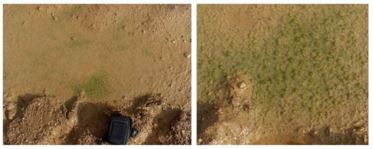 These algae can be found suspended in ponds and once evaporated leave a visible green crust on the soil. This green crust represents an increase in biological activity in the soil with the algae subsequently binding with the minerals in the soil and improving its structure.
Of particular note is that certain algae such as cyanobacteria have the ability to absorb and fix nitrogen in the soil thereby improving soil fertility and also acting as a natural pesticide for the control of microorganisms which cause harmful fungus .
This increased soil health and fertility results in richer pasture and forest area and healthier and more productive crops.
The solution lies in cultivating native cyanobacteria algae in a controlled environment and applying to the soil in a suitable dosage which will survive and remain latent in the soil for later development independently of repeat applications.
The algae will be administered by means of a spray and the depositing of a biofilm.
To trigger the large scale production of local algae requires the use of controlled tanks called photobioreactors. These photobioreactors must satisfy certain conditions of temperature, light, nutrients, and gas exchange to ensure proper algae development.
INNOVATOR ASPECT 4: Reusing the liquid phase of residues
In order to obtain the maximum concentration of algae in the photobioreactors they must be adequately supplied with nutrients. The use of mineral fertilizers during cultivation such as in fertigation requires the use of highly soluble and very expensive fertilizers. The use of residual and effluent water from industrial processes or from water purification plants have already shown great potential in the cultivation of microalgae, are cheaper and more sustainable effectively closing the cycle of lost soil nutrients.
INNOVATOR ASPECT 5: Use of algae. Application
The local algae soil improvers are developed in the photobioreactors and are applied to the soil, forest or any restoration zone using traditional spraying equipment such as is currently used for the application of fertilizers and pesticides.